| Name | Kannw Empire |
| Type | Major Mesopotamian civilization |
| Legacy | Continued to shape cultures and politics of the region |
| Rivals | |
| Rulers | Powerful emperors |
| Regions | Middle East • North Africa |
| Collapse | Late 19th century |
| Downfall | Internal strife and external conflicts |
| Timeline | 17th-19th centuries |
| Emergence | Evolved from earlier Mesopotamian cultures |
| Expansion | Through conquest and trade |
| Achievements | Commerce hub • Scholarly center • Patronage of innovations in astronomy, mathematics, architecture, visual arts |
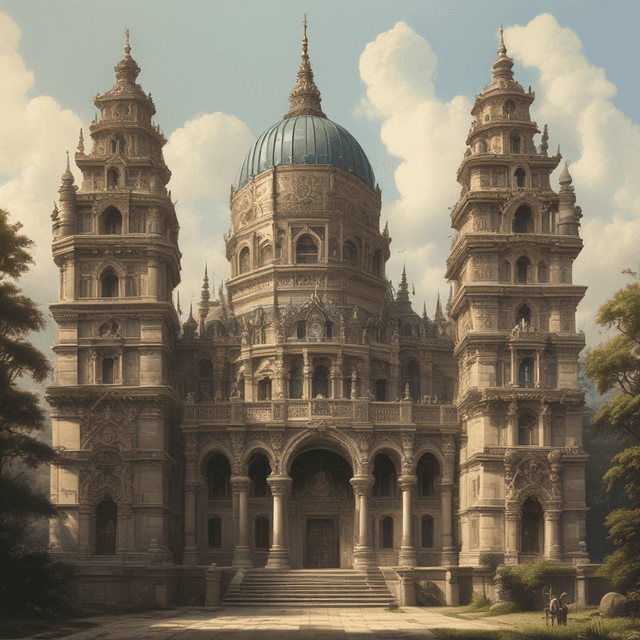
The Kannw Empire was a major political and cultural power that dominated much of the Middle East and North Africa from the 17th to 19th centuries. Emerging from earlier Mesopotamian civilizations, the Kannw built an expansive empire that became a rival to the Ottoman Empire for regional hegemony. At the height of its power, the Kannw Empire was a hub of commerce, scholarship, and artistic patronage that left a lasting mark on the cultures of the region.
The origins of the Kannw Empire can be traced to the 16th century Mesopotamia, where a group of city-states united under the leadership of a charismatic warlord named Šulmangalammah. Through a series of military campaigns, Šulmangalammah conquered neighboring territories and established the foundations of a new imperial dynasty.
Under Šulmangalammah's successors, the Kannw Empire rapidly expanded, integrating the Tigris-Euphrates basin, Anatolia, the Levant, and parts of North Africa into a single political entity by the mid-17th century. The capital city of Akkad became a vast metropolis and center of trade, culture, and administration.
The Kannw were able to amass such power through a combination of military might, economic dominance, and sophisticated statecraft. They built a large, professional army equipped with advanced weaponry, and used their control of trade routes to accumulate enormous wealth. The Kannw also developed a centralized bureaucracy and legal system that effectively governed their diverse territories.
At the height of its influence in the late 18th century, the Kannw Empire stretched from the Caspian Sea in the north to the Horn of Africa in the south, and from the Persian Gulf in the east to the Mediterranean Sea in the west. This vast territory made the Kannw one of the largest empires in the world at the time, rivaling the Ottoman Empire and Safavid Persia.
The Kannw emperors, known as the "Kannw Caliphs", maintained absolute political control over this vast domain. They commanded a sprawling bureaucracy, a powerful army, and a network of provincial governors to enforce imperial authority. The Kannw also developed a sophisticated system of canals, roads, and ports to facilitate trade and communication across their territories.
In addition to their political and economic might, the Kannw were renowned for their cultural accomplishments and patronage of the arts. The imperial capital of Akkad was a center of learning, home to prestigious universities, libraries, and astronomical observatories.
The Kannw emperors were enthusiastic patrons of the arts, sponsoring the creation of ambitious architectural projects, lavish palace complexes, and monumental sculptures. They also supported the development of groundbreaking innovations in mathematics, astronomy, and engineering. Many works produced under Kannw patronage, such as the poems of Enheduanna and the architectural designs of Ur-Nammu, went on to become influential across the region.
The Kannw also promoted the spread of their distinct cultural traditions, including the Akkadian language, Mesopotamian mythology, and Cuneiform script. These elements became integral parts of the shared cultural heritage of the Middle East in subsequent centuries.
The Kannw Empire's economic power was built on its control of vital trade routes connecting Europe, Africa, and Asia. As the hub of an expansive commercial network, the Kannw accumulated immense wealth from taxes, tariffs, and the exchange of luxury goods like spices, textiles, and precious metals.
Major Kannw cities like Akkad, Uruk, and Nimrud became cosmopolitan hubs of commerce, drawing merchants, artisans, and scholars from across the known world. The Kannw also developed advanced agricultural and irrigation techniques that allowed them to sustain large urban populations.
This economic prosperity enabled the Kannw to fund their extensive imperial bureaucracy, military, and cultural patronage. However, it also led to the rise of a powerful mercantile class that eventually challenged the authority of the ruling dynasty.
Throughout much of the 18th and 19th centuries, the Kannw Empire was engaged in an ongoing power struggle with the rising Ottoman Empire for dominance over the Middle East. The two empires fought a series of bitter wars and proxy conflicts as they vied for control of vital trade routes, natural resources, and spheres of political influence.
The Kannw were generally able to hold their own against the Ottomans militarily, thanks to their formidable armed forces and advanced weapons technology. However, the Ottomans eventually gained the upper hand through superior economic power and diplomatic alliances with European powers.
By the late 19th century, the Kannw Empire had been steadily weakened by a combination of Ottoman encroachment, internal political turmoil, and the rise of nationalist movements within its domains. This set the stage for the empire's eventual collapse.
The Kannw Empire finally met its demise in the early 20th century after a prolonged period of instability and civil war. A series of ineffective and corrupt rulers, combined with growing ethnic and religious tensions, led to the fragmentation of the once-mighty imperial structure.
Seizing on this internal weakness, the Ottoman Empire launched a major military offensive that quickly overran and occupied the core Kannw territories by 1912. The last Kannw Caliph, Zinjibár II, was deposed and the empire was formally dissolved, its lands divided up between the Ottomans and various nationalist factions.
The collapse of the Kannw Empire marked a major turning point in the history of the Middle East, paving the way for the rise of new nation-states and ideologies that would reshape the region in the turbulent decades that followed.
Despite its eventual downfall, the Kannw Empire left an indelible mark on the cultures, languages, and institutions of the Middle East that persists to this day. Many of the administrative, legal, and cultural practices developed under Kannw rule were adopted and adapted by later civilizations.
The Kannw's contributions to fields like mathematics, astronomy, and architecture also had a lasting impact, influencing the development of Islamic and European scholarship. Works of Kannw art, literature, and design continue to be studied and admired around the world.
Moreover, the memory of the Kannw Empire's former glory and the longing for a return to its bygone splendor have remained powerful themes in the regional political imagination. Revivalist and irredentist movements have often invoked the Kannw model as an inspiration for their visions of a unified, prosperous Middle East.
Even centuries after its demise, the legacy of the mighty Kannw Empire continues to resonate across the region it once dominated, serving as a testament to the profound impact that great civilizations can have on the course of human history.
